NASA Turns Old Spy Tech Into a New Window on the Universe
7 Articles
7 Articles


Darko Donevski, an astrophysicist from Vršac, whose team is involved in the Nancy Grace Roman telescope project, speaks for the BBC in Serbian.

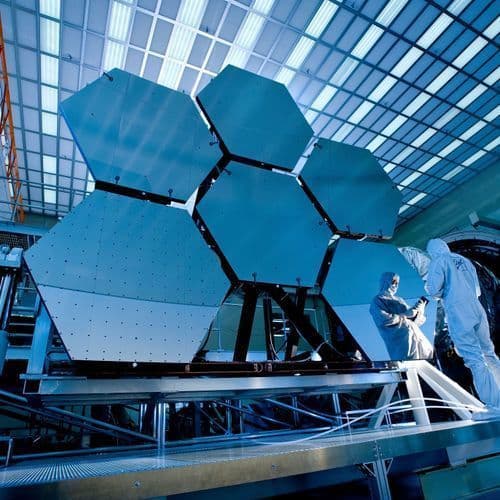
The mirror inside NASA's Roman telescope was donated by America's spy satellite agency and reground to look outward instead of down
NASA's Nancy Grace Roman Space Telescope carries a coronagraph designed to directly image exoplanets in visible light for the first time. What it actually promises is smaller, and more interesting, than the headlines suggest. The post The mirror inside NASA’s Roman telescope was donated by America’s spy satellite agency and reground to look outward instead of down appeared first on Direct Message News.

A mirror the size of that used by Hubble, built for a U.S. reconnaissance satellite that never came into space, became the...

The $4.3 billion Roman Space Telescope was built around a mirror the U.S. intelligence community no longer needed — a Hubble-sized spy-satellite optic that had been sitting unused in storage until NASA realised it could transform its next great observatory.
Roman launched with a Hubble-sized primary mirror inherited from the U.S. intelligence community. The hardware gave NASA a head start, but transforming it into a $4.316 billion infrared observatory took far more than pointing a spare spy telescope toward deep space.

The most anticipated telescope of the year began its career with an unusual curriculum: it was intended for espionage, not astronomy. Built
Coverage Details
Bias Distribution
- 50% of the sources lean Left, 50% of the sources are Center


Factuality
To view factuality data please Upgrade to Premium