NASA's newest space telescope launches on a quest to explore the hidden universe
The observatory will survey the sky 1,000 times faster than Hubble and begin routine science observations after about 100 days.
- On Sunday, August 30, 2026, NASA launched the Nancy Grace Roman Space Telescope from Kennedy Space Center aboard a SpaceX Falcon Heavy rocket. The observatory separated from its rocket 31 minutes later, beginning its journey toward the Sun–Earth Lagrange point L2.
- Scientists designed the $4.3 billion Roman Space Telescope to probe astrophysics mysteries, including dark matter and dark energy, while conducting an unprecedented census of exoplanets and mapping billions of galaxies over its five-year primary mission.
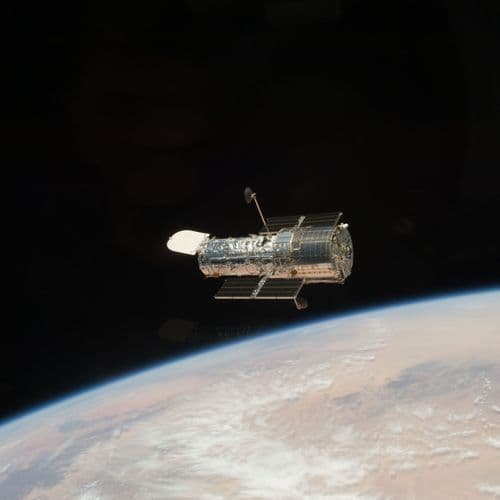
- The Wide Field Instrument uses a 2.4-meter mirror from the National Reconnaissance Office to survey the sky 1,000 times faster than the Hubble Space Telescope, capturing images 100 times larger than its predecessor.
- Mission teams confirmed the observatory began its three-month, million-mile transit toward L2, where it will undergo instrument calibration. NASA expects the first high-resolution science images in early 2027.
- Despite facing multiple termination threats in past fiscal budget requests, the mission launched nine months ahead of its formal schedule. Named for Nancy Grace Roman, NASA's first chief astronomer, the project honors her legacy as the 'Mother of Hubble.
453 Articles
453 Articles

NASA’s Roman Space Telescope Launches on Mission to Probe Hidden Universe
NASA’s Nancy Grace Roman Space Telescope launched August 30, 2026 at 7:26 a.m. EDT (11:26 UTC) aboard a SpaceX Falcon Heavy from Launch Complex 39A at Kennedy Space Center, beginning a three-month, 1.5 million km (930,000 miles) journey to its operating post at the second Sun-Earth Lagrange point (L2). The post NASA’s Roman Space Telescope Launches on Mission to Probe Hidden Universe appeared first on Sci.News: Breaking Science News.

One of Roman's main challenges is to understand the nature of the dark energy that scientists explain the expansion of the universe.

NASA launches $4B Roman Space Telescope
NASA began a new mission to probe some of the biggest mysteries in astrophysics and cosmology with the launch on Sunday of the U.S. space agency's new flagship astronomical observatory, a repurposed spy satellite that will capture panoramic views of the cosmos.


Coverage Details
Bias Distribution
- 54% of the sources are Center


Factuality
To view factuality data please Upgrade to Premium