NASA's newest space telescope launches on a quest to explore the hidden universe
The $4 billion observatory will map billions of galaxies and search for exoplanets while probing dark matter and dark energy.
- On Sunday, August 30, 2026, NASA launched the Nancy Grace Roman Space Telescope from Kennedy Space Center aboard a SpaceX Falcon Heavy rocket. The observatory separated from its rocket 31 minutes later, beginning its journey toward the Sun–Earth Lagrange point L2.
- Scientists designed the $4.3 billion Roman Space Telescope to probe astrophysics mysteries, including dark matter and dark energy, while conducting an unprecedented census of exoplanets and mapping billions of galaxies over its five-year primary mission.
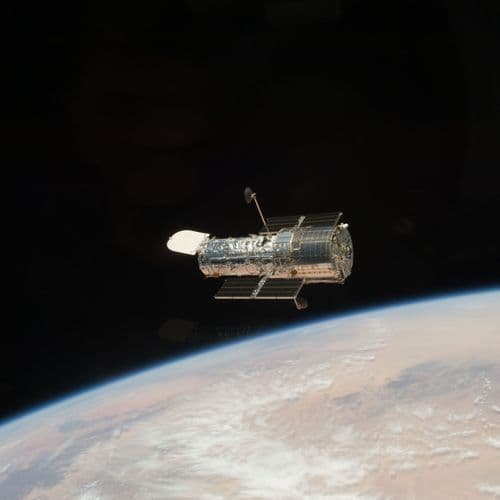
- The Wide Field Instrument uses a 2.4-meter mirror from the National Reconnaissance Office to survey the sky 1,000 times faster than the Hubble Space Telescope, capturing images 100 times larger than its predecessor.
- Mission teams confirmed the observatory began its three-month, million-mile transit toward L2, where it will undergo instrument calibration. NASA expects the first high-resolution science images in early 2027.
- Despite facing multiple termination threats in past fiscal budget requests, the mission launched nine months ahead of its formal schedule. Named for Nancy Grace Roman, NASA's first chief astronomer, the project honors her legacy as the 'Mother of Hubble.
590 Articles
590 Articles
![[your]NEWS](/_next/image?url=https%3A%2F%2Fgroundnews.b-cdn.net%2Finterests%2Ffb6dc495f74049f513563c33352175eaa0ecd509.jpg%3Fwidth%3D24&w=64&q=75)
NASA’s Nancy Grace Roman Space Telescope Launches From Cape Canaveral
NASA’s Nancy Grace Roman Space Telescope launched from Cape Canaveral early Sunday, beginning a mission designed to give scientists an unprecedented view of the universe ... The post NASA’s Nancy Grace Roman Space Telescope Launches From Cape Canaveral first appeared on [your]NEWS.

NASA’s Roman telescope leaves Earth to chart the stars
At 7:26 a.m. Eastern time Sunday, the Nancy Grace Roman Space Telescope blasted off from the Florida coastline and sailed toward the stars. So begins its journey to capture deep, sweeping views of our universe, as far back as when it was only a few hundred million years old. The post NASA’s Roman telescope leaves Earth to chart the stars appeared first on Hawaii Tribune-Herald.

NASA launched a new space telescope called Nancy Grace Roman, on a scientific mission to study dark energy and matter.
 KWXX - Hilo, HI


NASA launches Roman Space telescope on mission to probe deep space and distant galaxies
NASA launched its next-generation Nancy Grace Roman Space Telescope Sunday, sending the $4.3 billion observatory into space aboard a SpaceX Falcon Heavy rocket to investigate some of the universe’s biggest mysteries. Named for Nancy Grace Roman, NASA’s first chief astronomer and a key figure in the development of the Hubble Space Telescope, the observatory is expected to provide a sweeping new view of cosmic history. Scientists hope its enormous…


NASA launched the Nancy Grace Roman Space Telescope yesterday, named after the first director of astronomy of the U.S. space agency. The purpose is to search for new planets around other stars and explore the secret dark energy. The power of the telescope is speed, so the observations that Hubble would take a century, the Roman would make in a month.
Coverage Details
Bias Distribution
- 53% of the sources are Center


Factuality
To view factuality data please Upgrade to Premium