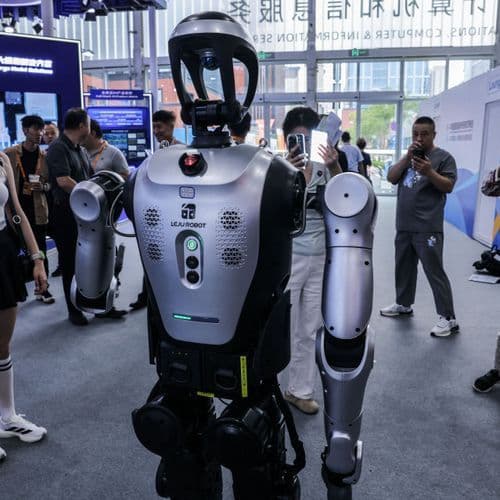
The ‘Robot Olympics’ Were Spectacular – but Will This Technology End up Helping Humans?
More than 2,000 robots competed in 51 events, while organizers used household tasks and emergency response tests to measure real-world usefulness.
6 Articles
6 Articles

The second edition of the Humanoid Robot Olympics is being held in Beijing, China. From August 22 to 26, humanoids will compete in a variety of sports. There were many successes, as well as failures, with some participants almost falling apart and others having to be carried away on stretchers.

At the Robot Olympiad in Beijing, our author learns that machines can not only make coffee – but also break world records. But is this also exciting?

The second World Humanoid Robot Games, a kind of Olympic Games for robots, conclude today in the Chinese capital, Beijing. Humanoid robots ran faster than Usain Bolt and jumped higher than any human has ever. But the most important parts of the games went much less unnoticed, even though it is precisely these that will have the greatest impact.

The ‘robot Olympics’ were spectacular – but will this technology end up helping humans?
In the past few days your social media feeds may have been full of videos of humanoid robots sprinting, jumping and performing various incredible (and not so incredible) feats. This is because the second World Humanoid Robot Games have just finished in Beijing. It featured many incredible sights, but some of the more mundane events offered more insight into how this technology will eventually help humans. Robots are now faster than people Common…


Can AI robot Olympics happen? The future of robotics in competitive sports
What once felt like science fiction, an AI robot Olympics, now looks more possible as robotics improves. Reports mention sprinting, soccer, table tennis, gymnastics, and other tests. The World Humanoid Robot Games in Beijing brings in more than 2,000 robots for 51 events. That scale shows how fast robot sports are growing. Still, could robots run something like their own Olympics one day? It could happen. But getting a world wide version would m…
Coverage Details
Bias Distribution
- 60% of the sources are Center


Factuality
To view factuality data please Upgrade to Premium