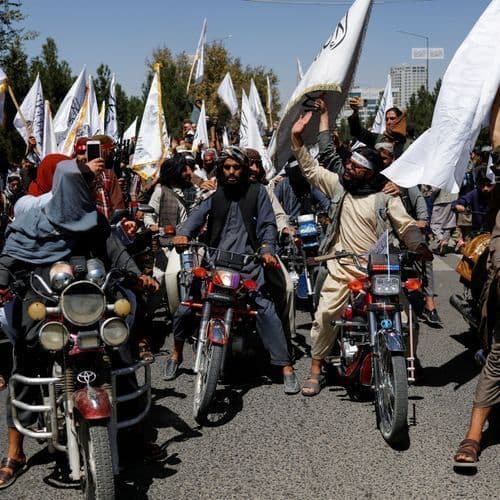
Five Years of Taliban Rule: Afghanistan’s Government Builds Ties without Recognition
Taliban authorities have deepened regional and Western contacts as 4.7 million Afghans face life-threatening malnutrition, the World Food Programme said.
- On Saturday, August 15, 2026, the Taliban marks five years since fighters entered Kabul and the Afghan government collapsed. Despite lacking formal recognition from most Western nations, the regime has built pragmatic working relationships with various international partners.
- Regional neighbors, including Tajikistan and Uzbekistan, have adopted pragmatic engagement to secure trade routes through Afghanistan. This contrasts sharply with the Taliban's draconian policies, which Human Rights Watch says have created one of the world's gravest human rights crises for women and girls.
- The World Food Programme reports nearly 19 million Afghans face acute hunger, with 4.7 million suffering life-threatening malnutrition. Meanwhile, women remain banned from secondary school and university, while morality police patrol streets enforcing strict dress codes.
- Taliban spokesman Zabihullah Mujahid stated the government "seeks relations with all countries," hosting envoys in Kabul as part of its diplomatic strategy. India has leveraged this approach, securing sanctions waivers in 2025 to facilitate travel for Foreign Minister Amir Khan Muttaqi.
- Erica Gaston of the United Nations University Centre for Policy Research noted regional states view engagement as "inevitable." Yet many nations restrict further ties pending changes to rules preventing girls' education at age 12, with no policy shift expected.
43 Articles
43 Articles

Five years after the withdrawal of Western forces, the country is facing the worst humanitarian crisis in modern history.

OPINION. Five years after the Taliban took power, Switzerland must find a way to reconnect high-level contacts with the Afghan authorities, in order to be able to defend our interests on the spot and assert our principled positions on human rights – and especially on women, writes the former Ambassador of Switzerland to Pakistan and Afghanistan Benedict de CerjatAfter years of civil war, the Taliban regained power all over Afghanistan just five …

Next August 30 will be 15 years since the U.S. ended its occupation of Afghanistan which lasted for 2 decades (2001 – 2021). The Taliban had taken the capital Kabul 15 days earlier, consolidating dominance in the area. The then president, Joe Biden, justified the decision by indicating ... Continue reading "Five years since the U.S. left Afghanistan. Was that occupation a failure for the White House?" The post Five years since the U.S. left Afgh…

Five years on, international limitations weigh on Taliban-run Afghanistan as rights concerns persist
Five years on, international limitations weigh on Taliban-run Afghanistan as rights concerns persist - The New Humanitarian puts quality, independent journalism at the service of the millions of people affected by humanitarian crises around the world

When US left Afghanistan, China moved in. So How's it going?
When the Taliban reclaimed power five years ago, China appeared poised to capitalize on Afghanistan’s new realities. Beijing quickly took important steps to establish de facto relations with the Islamic Emirate, such as keeping its embassy open in Kabul, maintaining direct ties with Taliban leaders, and expanding political and security cooperation. In January 2024, Xi Jinping became the first head of state to accept credentials from a Taliban-ap…

Coverage Details
Bias Distribution
- 44% of the sources are Center


Factuality
To view factuality data please Upgrade to Premium