Ultra-Orthodox protesters block roads around Jerusalem, Bnei Brak at anti-draft rallies
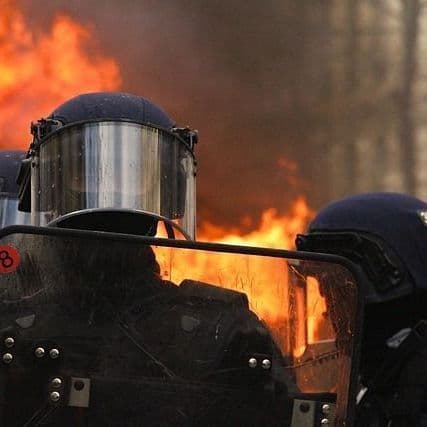
Police used stun grenades and mounted officers as hundreds of Haredi protesters blocked roads and light rail lines over renewed draft arrests.
- On Thursday, hundreds of Haredi protesters from the hardline Jerusalem Faction blocked major roads in Jerusalem and Bnei Brak, disrupting traffic to protest the military's recent decision to resume arresting draft evaders.
- Tensions escalated after the Israel Defense Forces resumed proactive arrests of draft evaders following a two-month pause, prompting activists to utilize a community alert system known as "Black Alert" to mobilize crowds.
- Police Commissioner Danny Levy ordered a "zero tolerance" approach to road blockages, leading officers to use stun grenades and mounted units to disperse crowds at Jerusalem's Chords Bridge and Bnei Brak's Highway 4.
- Demonstrations caused severe traffic jams across highways 1, 2, 4, 6, 40, 41, 65, 70, and 85, while Jerusalem's light rail network split operations into two sections to bypass the unrest.
- The unrest reflects a prolonged dispute over mandatory service, as the High Court of Justice ruled in 2024 that no legal basis exists for the blanket exemption from conscription that many ultra-Orthodox leaders argue protects Torah study.
11 Articles
11 Articles


EXPLOSIVE ACCUSATION: Shas Claims Kaplan Protest Activists Are Funding Chareidi Roadblocks, Accuses Attorney General of Election Interference
Israel’s Shas party issued a blistering statement Thursday evening accusing anti-government activists associated with the Kaplan protest movement of financing demonstrations by the Peleg Yerushalmi, while alleging that Attorney General Gali Baharav-Miara is deliberately using the arrests of yeshiva bochurim to undermine the chareidi community and weaken the political right ahead of the elections. The extraordinary accusations came amid widespread demonstrations and major highway closures in Bnei Brak and Yerushalayim following the arrest of a yeshiva bochur from Be’er Sheva, Eliyahu Davda, over military enlistment issues. Shas alleged that the timing of the arrests and the resulting unrest were part of a calculated effort to damage the standing of the chareidi public, discourage religious voters from participating in the election and fracture the right-wing political bloc. In its statement, the party declared, “The deliberate and painful arrests of yeshiva students during this period, and the chaos we are now witnessing on Israel’s roads, are the work of the attorney general.” The party further alleged that the objective was “to dismantle the right-wing bloc, turn the public against the chareidi community, and cause segments of that community to refrain from voting.” Shas characterized the developments as an unprecedented intrusion by legal authorities and elements within the military police into the electoral process, describing the situation as “blatant and unprecedented interference.” The party did not stop at criticizing the attorney general. It also leveled a particularly striking allegation against the Kaplan protest movement, whose activists have been prominent in demonstrations against the Netanyahu government and its judicial policies. According to Shas, information obtained by the party indicates that individuals associated with the Kaplan movement are providing financial support for the ongoing protests against the arrests of bnei yeshiva. The party alleged that extremist elements have joined those demonstrations and are responsible for violent disturbances and roadblocks that place lives in danger. The claims of financial involvement by Kaplan activists were presented by Shas as information in its possession. The statement did not publicly identify the alleged funders or provide documentary evidence establishing the purported financial connection. At the same time, Shas sought to distance the broader chareidi community from the violent confrontations and disruptions that accompanied the demonstrations. “The acts do not represent the chareidi community,” the party declared, warning that the disturbances were causing a “terrible chillul Hashem” and inflicting serious damage on efforts to secure a legislative arrangement protecting the status of full-time Torah learners. The statement reflected growing concern within Shas that the confrontational tactics employed by Peleg Yerushalmi demonstrators could undermine public sympathy for the struggle over yeshiva military enlistment and complicate negotiations over a draft law. Shas concluded its statement with a direct appeal to the chareidi public: “Do not allow the attorney general and Kaplan’s money to sabotage us from within. Do not let them win.” The allegations prompted a response from the Committee for the Salvation of the Torah World, which rejected the suggestion that the demonstrations were being financed by anti-government activists. The committee insisted that the protests were being organized and funded independently by members of the Torah community, without political considerations, and that their sole objective was to protect yeshiva bochurim and kollel yungeleit from military conscription. The controversy also unfolded amid tensions between Shas and Peleg Yerushalmi activists following the disruption of a Shas election gathering in Modiin Illit attended by party chairman Aryeh Deri. Protesters entered the area of the gathering and shouted against the Shas leadership, leading to a confrontation that ultimately brought the event to an early end. Police were summoned and assisted Deri and other participants in leaving the building. Authorities reported that order was restored and that no injuries or property damage resulted from the incident. Shas subsequently accused extremist Peleg activists of attempting to disrupt the gathering and again alleged that individuals associated with the Kaplan movement were providing financial backing. The day’s unrest followed the arrest of Eliyahu Davda, a yeshiva bochur from Be’er Sheva, whose detention triggered widespread anger and demonstrations against the military draft enforcement campaign. Protesters blocked major traffic arteries, including Highway 4 near Bnei Brak and roads at the entrance to Yerushalayim, leading to lengthy delays and confrontations with police. The demonstrations eventually ended after organizers instructed participants to leave the protest locations and return to their learning, allowing authorities to reopen the affected roads. {Matzav.com}
Coverage Details
Bias Distribution
- 60% of the sources lean Right


Factuality
To view factuality data please Upgrade to Premium