Scientists Warn Climate Change Is Driving More Extreme Weather
Scientists say heat waves, floods and wildfires are becoming more intense as greenhouse gases build up, with 84% of corals hit by heat stress.
- Global temperatures in 2025 were 1.44 degrees Celsius warmer than the early 1800s, driving more frequent and intense extreme weather events worldwide. Scientists warn rising heat is fueling increasingly destructive climate disasters.
- Amateur scientist Eunice Newton Foote identified the greenhouse effect over 150 years ago, yet humanity continues releasing emissions into the atmosphere. Many nations now target net-zero emissions by 2050 to mitigate damage that could take centuries to reverse.
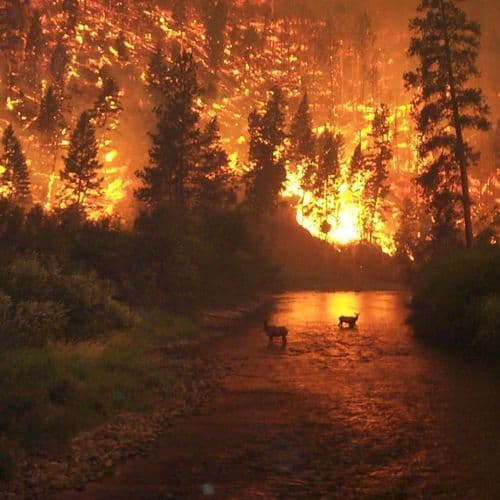
- Australia's 'Black Summer' wildfires in 2019 and 2020 scorched over 46 million acres, while Pakistan's 2022 flooding left a third of the country underwater. Hurricanes Milton and Helene ravaged parts of the United States in 2024.
- President Trump dismissed climate policies as a 'Green New Scam,' while seismologist Lucy Jones advocates for infrastructure retrofitting. This political divide complicates unified government-led efforts as the United States marks its 250th birthday.
- Catastrophic events are not a matter of if, but when, according to climate scientist Daniel Swain. He warns of a 'Boy Who Cried Wolf' problem where people ignore risks until unavoidable, even as the time between extreme events shrinks.
50 Articles
50 Articles
 The Independent (US)
 Western Morning News
The next ‘Big One’: The world in inching towards more catastrophic climate events
Science tells us catastrophe is not a question of if, but when


World inches toward catastrophic climate events: 'Bigger shocks are on the way'
Scientists have long warned that the world will experience more intense extreme weather events like heat waves, storms, floods and droughts as long as we continue to use gas, oil and coal at our current pace. Those fossil fuels release…
 Associated Press News


The world inches toward catastrophic climate events: 'Bigger shocks are on the way'
Scientists have long warned that the world will experience more intense extreme weather events like heat waves, storms, floods and droughts as long as we continue to use gas, oil and coal at our current pace.

Climate warming intensifies thermal shocks, accelerating fragmentation of
Climate change is reshaping freshwater ecosystems in a way that may be faster, more abrupt and more disruptive than long-term warming trends alone suggest. A new study by Wang, Liu, Holden and colleagues reports that rising temperatures are driving increasingly severe thermal shocks in rivers, streams and other freshwater habitats, while simultaneously accelerating the fragmentation of the places where aquatic organisms can survive. The findings…
Coverage Details
Bias Distribution
- 47% of the sources lean Left


Factuality
To view factuality data please Upgrade to Premium