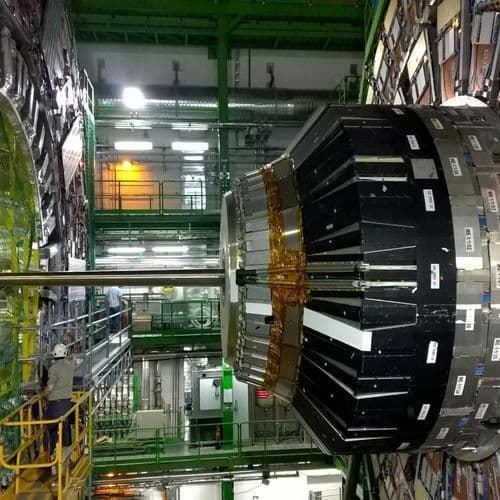
That's Why CERN Migrates Its Linux Systems From Red Hat to Debian
 This story is only covered by news sources that have yet to be evaluated by the independent media monitoring agencies we use to assess the quality and reliability of news outlets on our platform. Learn more here.
6 Articles
6 Articles

CERN is one of the most important research centres in Europe. The organization announces a strategic migration: the migration of 2,200 posts currently under Red Hat Enterprise Linux to Debian. CERN has been using Red Hat distributions for 18 years. Above all, these posts connect to more than 17,000 equipments. That is, the sensitivity of the migration. The project was presented at the MiniDebConf Winterhur 2026. The essential thing for the teams…

By the end of 2026, the European Centre for Nuclear Research will migrate 2,200 industrial computers from Red Hat to Debian 13. This transition avoids a hardware obsolescence forced by the new requirements of RHEL. However, the rest of the computing infrastructure will remain under AlmaLinux and RHEL.

CERN had previously used Linux, namely Red Hat Enterprise Linux. However, its new requirements prevent some of the machines controlling CERN's accelerators from using subsequent versions of the system. To avoid costly replacement of working electronics, the laboratory is switching to Debian 13, which doesn't push the limits beyond the capabilities of the computers.

CERN migrates several thousand industrial computers that control its particle accelerators, moving from IBM Red Hat Linux to Debian 13 in order to achieve significant savingsCERN is currently making a major transition to Linux that will allow, by the end of 2026, more than 2,200 industrial computers and embedded systems of its accelerator infrastructure to run under Debian 13 "Trix". The scale of the project is considerable. During the MiniDebCo…
 netzwoche.ch
 it-markt.ch
CERN changes the Linux distribution from Red Hat to Debian for some of its control systems. With the migration, the nuclear research center wants to avoid hardware renewal estimated at CHF 5.4 million.
Coverage Details
Bias Distribution
- There is no tracked Bias information for the sources covering this story.


Factuality
To view factuality data please Upgrade to Premium