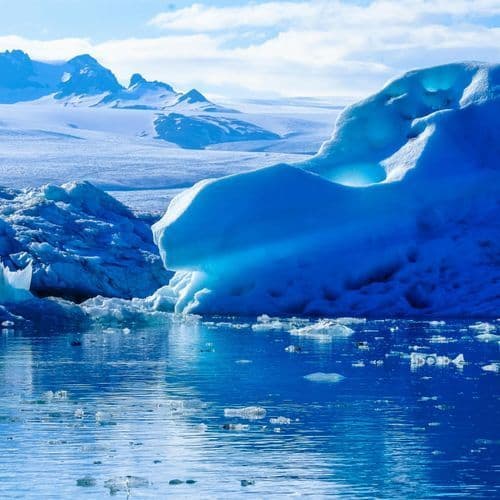
Swiss Glaciers Lose over 5% of Ice Volume in 2026 as Heat Waves, Low Winter Snow Accelerate Thaw
- On Thursday, the Swiss Glacier Monitoring Network and the Swiss Commission for Cryosphere Observation reported that Swiss glaciers lost 5.5% of their ice volume in 2026, driven by a record-breaking European heatwave.
- A combination of record summer temperatures and insufficient winter snow drove the "enormous" melting, according to GLAMOS director Matthias Huss. The loss remains slightly below the 2022 record of 6% due to more winter snow cover.
- Scientists estimate Swiss glaciers lost around 2.2 trillion liters of water between July and September alone. Switzerland's largest glacier, Aletsch Glacier, suffered its biggest-ever melt this year, while Glacier de Tsanfleuron lost more than four meters of thickness.
- Known as Europe's "water tower," Swiss glaciers feed major rivers including the Rhine and Danube, but accelerated melt threatens to disrupt hydropower production and agricultural water supplies.
- Huss warned that Alpine glaciers have no chance of long-term survival under current conditions, with warming entirely driven by human emissions. "Now we are in this new world, in this future, where glaciers are just melting away," he said.
123 Articles
123 Articles

Swiss glaciers have gone through a new "catastrophe" year, losing their volume to nearly 20% in five years. This is the second lowest annual balance sheet after 2022, according to a study published on Thursday.


Heat waves and little snow are massively increasing the glaciers in Switzerland, Austria and Germany. Why small glaciers are already disappearing and the supply of drinking water is decreasing.
 saarbruecker-zeitung.de

Heat waves and little snow are massively increasing the glaciers in Switzerland, Austria and Germany. Why small glaciers are already disappearing and the supply of drinking water is decreasing.

The volume of ice in the Swiss Alps has reportedly decreased by almost 20 percent in the last five years.

The situation is critical, in 2026 the average thickness of individual glaciers decreased by 2.5–4 meters.

Coverage Details
Bias Distribution
- 46% of the sources are Center


Factuality
To view factuality data please Upgrade to Premium