Neanderthals Passed on a Gene that Helps Modern Humans Pack on More Muscle — but only a Few People Have It
Adults carrying the variant had about 270 grams more muscle mass per copy, researchers said, with effects appearing mainly after puberty.
- A study published Aug. 5 in Cell found that a Neanderthal gene variant inherited through interbreeding about 47,000 years ago remains in some humans today, enhancing how cells respond to growth hormone.
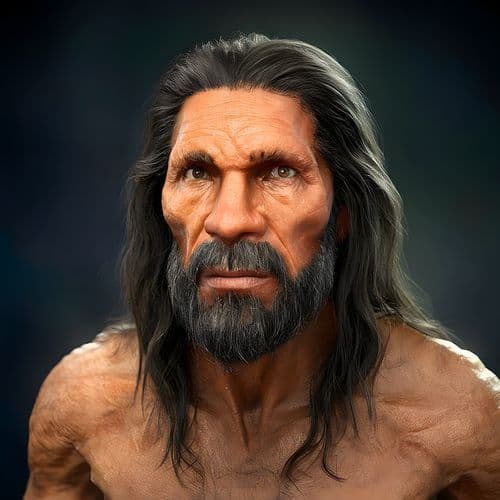
- Recent scientific findings have broadened understanding of Neanderthals as possessing broad ribcages, thick bones and strong muscles suited for hunting Ice Age beasts, providing context for this ancient genetic legacy.
- Laboratory experiments showed mouse cells with the Neanderthal version of the growth hormone receptor grew about 40 percent more than standard cells; adults carrying the variant averaged about 270 grams additional muscle mass.
- The variant shows striking geographic variation, appearing in about 1% of people with European ancestry but up to 25% of those with Southern Asian or Southeast Asian ancestry, prompting further investigation.
- Researchers analyzed more than 1.1 million human genomes alongside ancient DNA from archaeological sites across Europe, the Balkans, Siberia and Asia, finding the variant's effects emerge only during puberty as one possible piece of a larger evolutionary puzzle.
11 Articles
11 Articles

Neanderthals passed on a gene that helps modern humans pack on more muscle — but only a few people have it
Tens of thousands of years ago, Neanderthals mated with modern humans and passed along a gene variant that enables us to pack on more muscle, a new study finds.Researchers found that this specific Neanderthal gene, a variant of the growth hormone receptor gene, causes cells to respond strongly to growth hormone. The Neanderthal version of the gene creates a growth hormone receptor with two amino acid changes and one deletion, compared with the t…

International scientists have identified an ancient genetic variant that passed from Neanderthals to modern humans and directly affects physical build. Research has shown that individuals carrying this gene are taller and more muscular than those who do not.

A Neanderthal gene variant may enhance the effects of growth hormone, and its carriers may be more muscular and taller on average.

Many People Today Carry A Neanderthal Growth Gene Linked To More Muscle
Neanderthals lived across western Asia and Europe before going extinct around 42,000 years ago, but their DNA lives on in people today. The post Many People Today Carry A Neanderthal Growth Gene Linked To More Muscle appeared first on StudyFinds.

An inherited gene variant of the Neanderthals could still have an influence on the physique today. This is shown by a new study.

Some Humans May Still Be Carrying Neanderthal Strength in Their DNA, Study Finds
The scientific community has been on a Neanderthal hot streak lately, each new find broadening our idea of who our ancient ancestors really were. Turns out, they were a lot smarter, a lot friendlier, a lot more family-focused than we once thought. This time, researchers used mouse genes to help discover that some people today […] The post Some Humans May Still Be Carrying Neanderthal Strength in Their DNA, Study Finds appeared first on VICE.
Coverage Details
Bias Distribution
- 34% of the sources lean Left, 33% of the sources are Center, 33% of the sources lean Right


Factuality
To view factuality data please Upgrade to Premium