Published • loading... • Updated
On the Ground in China’s Wiped-Out Border Zone, the Fate of Hundreds Is Still Unknown
Authorities say the disaster has killed 31 people and left 531 missing as drones and radar scan unstable slopes for secondary landslides.
- More than 2,300 rescuers, including 726 military and police personnel, are searching for survivors at mudslide-hit Gyirong Port in Xizang Autonomous Region following the August 26 glacier collapse.
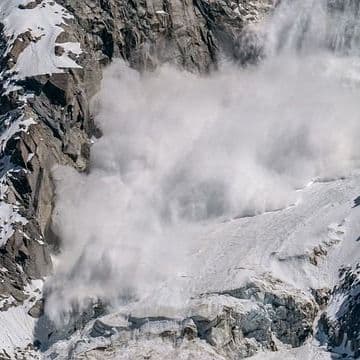
- A glacier on Nepal's Langtang Lirung mountain cracked and broke off, triggering a mudslide that obliterated the border crossing once serving as a bustling trade hub between China and Nepal.
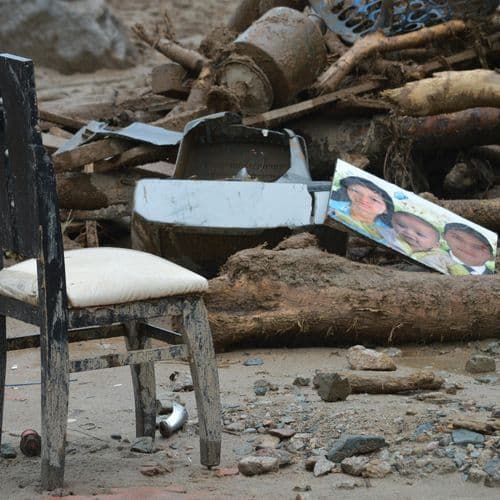
- Authorities report 31 confirmed dead and 531 missing on the Chinese side of the border as of Saturday, with search teams describing the site as a "moonscape of stones, gravel and sludge."
- Rescuers are utilizing over 800 drones and advanced slope radar to monitor secondary geological hazards at Gyirong Port, after crews cleared narrow mountain roads on Wednesday to allow heavy machinery access.
- Nepali Foreign Minister Shisir Khanal emphasized that "the Himalayan ecosystem is our shared future," urging stronger data-sharing and cooperation with China to address growing, unpredictable natural disaster risks from climate change.
Insights by Ground AI
17 Articles
17 Articles


On the ground in China’s wiped-out border zone, the fate of hundreds is still unknown
No survivors have been found at the port, which has become a focal point for families both in China and around the world desperate for any information about loved ones they believe were at the checkpoint when catastrophic flash floods hit.
·Atlanta, United States
Read Full Article
G216 roadwork improves a key stretch about 1km from Gyirong Port's core disaster area
Rescue teams are widening, leveling and reinforcing a key stretch of the G216 National Highway roughly 1 kilometer from the core disaster area of mudslide-hit Gyirong Port in southwest China's Xizang Autonomous Region.
·Beijing, China
Read Full Article
Monitoring equipment deployed in Gyirong as data shows stable conditions
China has deployed around 20 sets of monitoring equipment across the disaster-hit Gyirong area in the Xizang autonomous region, with real-time data showing geological conditions stabilizing, a senior geologist said.
·Beijing, China
Read Full Article
Coverage Details
Total News Sources17
Leaning Left4Leaning Right3Center7Last UpdatedBias Distribution50% Center
Bias Distribution
- 50% of the sources are Center
50% Center
L 29%
C 50%
R 21%


Factuality
To view factuality data please Upgrade to Premium