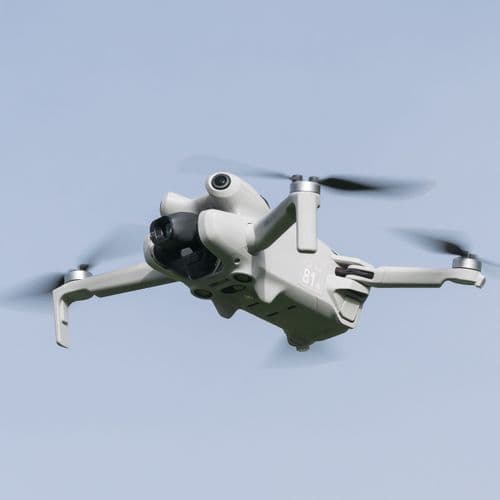
Germany Boosts Police Anti-Drone Unit After Airport Incident
Germany will raise its federal anti-drone police unit to 300 officers and expand bases from four to eight after a suspected sabotage incident.
- On Monday, August 10, Germany announced plans to expand its federal police anti-drone unit following the discovery of an explosives-laden UAV at Leipzig-Halle airport, a key military transport hub.
- Interior Minister Alexander Dobrindt labeled the Leipzig incident a "hybrid attack scenario" potentially involving a "foreign power," as authorities investigate suspected Russian sabotage against the military supply hub.
- Dobrindt plans to double personnel in the federal police anti-drone unit to 300, while a ministry spokeswoman confirmed that operational bases will increase from four to eight.
- Russia denied involvement in the incident, while its embassy last week dismissed it as a "hastily contrived provocation" that "serves only the interests of Kyiv and the militarist wing of the European political establishment."
- Germany and other European nations have frequently observed UAVs over sensitive sites, and officials announced a new drone technology research centre attached to the German Aerospace Centre will open next week.
59 Articles
59 Articles

Drone defense is a priority for the federal government. However, the dramatic incident with an explosive drone at Leipzig Airport shows that there are still considerable deficits.

Germany is strengthening defenses against drones at airports after the incident in Leipzig - 300 members of special forces will be deployed at eight locations, and the introduction of additional defense technology has also been announced.

The CDU youth organisation Junge Union NRW is pressing for close cooperation with Ukrainian security authorities. A corresponding position paper is available at WORLD.

Interior Minister Dobrint announces reform to respond to attempts to sabotage and destabilize

The incident occurred on the night of Monday 10 to Tuesday 11 August, forcing the runways to close for 90 minutes in the early morning. The scenario of a "hybrid attack" - sabotage, espionage or destabilization - is on the table.

The device was in the air for about two hours.
Coverage Details
Bias Distribution
- 42% of the sources are Center


Factuality
To view factuality data please Upgrade to Premium