El Niño to intensify before December peak
The UN weather agency says sea-surface temperatures could reach 3.7 C above normal, with impacts expected to compound man-made climate change.
- On Thursday, the World Meteorological Organization confirmed El Niño is firmly established and strengthening rapidly, with nearly 100% certainty it will persist through February 2027.
- WMO Secretary General Celeste Saulo told the Global Heat Forum in Bangkok that the ocean is "the warmest we've ever measured it," releasing stored heat and making more energy available for the event.
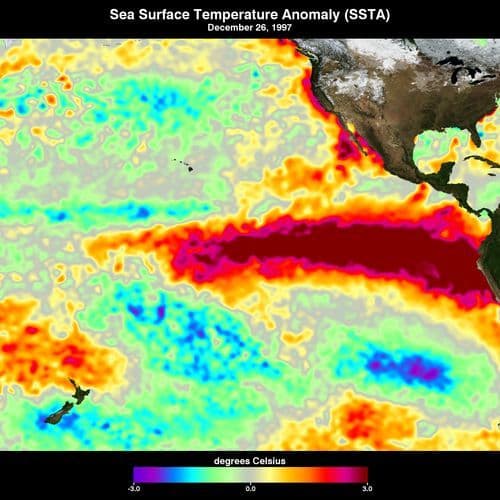
- Sea-Surface temperatures in the tropical Pacific are forecast to reach a record 3.7 degrees Celsius above normal from October-November-December, significantly exceeding the previous 2.6°C record set in 2015-2016.
- Researchers at the University of Chicago's Climate Impact Lab predict this "super-El Niño" could result in 451,000 excess deaths globally, while increasing risks of drought and floods through shifted rainfall patterns.
- Dubbed a "Godzilla" El Niño in Indonesia, the event could rank among the strongest observed since 1950, with WMO forecasts indicating further intensification before the anticipated December peak.
82 Articles
82 Articles

El Niño is a natural climate variation that warms surface temperatures in the centre and east of the equatorial Pacific Ocean.


The UN World Meteorological Organization (WMO) warned on Thursday that the El Niño phenomenon is continuing to strengthen and, at its peak in December, could be the most intense since 1950. This natural climate process, combined with climate change caused by human activity, can trigger significant temperature increases and extreme weather events worldwide, France24 reports.


The El Nino phenomenon is set to intensify and peak in December, the World Meteorological Organization (WMO) said in its monthly report. It said the current El Nino was likely to last until February next year and could be one of the strongest since 1950.

The World Meteorological Organization is almost certain that this year's El Niño will last until February 2027. Sea surface temperatures are expected to break records.
Coverage Details
Bias Distribution
- 45% of the sources lean Right


Factuality
To view factuality data please Upgrade to Premium