El Nino Hits ‘Strongest Intensity’ Since 1949: Japan Weather Agency
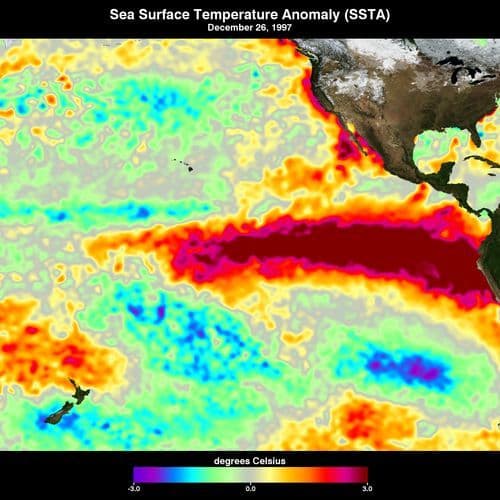
The agency said sea temperatures off Peru rose 4 degrees Celsius above average, the largest deviation since records began in 1949.
- On Friday, The Japan Meteorological Agency announced that El Nino reached its "strongest intensity on record," with temperatures in the monitoring area 4C above normal.
- El Nino typically occurs every two to seven years, warming surface temperatures in the central and eastern equatorial Pacific; the current event has persisted since spring 2026.
- The Copernicus Climate Change Service reported sea surface temperatures in the Nino3 monitoring region reached an "all-time high" of 29.70C last month, exceeding the 3.6C record set in 1997.
- Officials expect the phenomenon to persist through winter, bringing warmer temperatures and increased rainfall to Japan, while it is already causing droughts in Southeast Asia and high heat in South America.
- Copernicus director Carlo Buontempo said the intensifying El Nino will likely last into 2027, warning that "crossing the Paris Agreement's long-term limit is only a matter of time" as global temperatures rise.
10 Articles
10 Articles

El Nino breaks Pacific temperature record as weather pattern intensifies
An intensifying El Nino pushed sea surface temperatures in a key Pacific monitoring region to a record 29.70C in September, the EU’s Copernicus climate service said Monday. Forecasters expect the weather pattern, which raises drought and flood risks and exacerbates global warming, to become the strongest ever recorded this year.


(Tokyo=Yonhap News) Correspondent Cho Seong-mi = El Niño, characterized by rising sea surface temperatures in the central and eastern equatorial Pacific, recorded its strongest level in meteorological observation history last month...


The Japan Meteorological Agency stated on October 9th that El Nino had reached its strongest intensity ever recorded, with temperatures in the monitored area 4 degrees Celsius above average. Increased risk of water shortages: Prepare for El Nino response scenarios. El Nino and warming Atlantic could be an early warning sign of heatwaves in the Amazon. El Nino puts pressure on shipping and agriculture.
Coverage Details
Bias Distribution
- 50% of the sources are Center, 50% of the sources lean Right


Factuality
To view factuality data please Upgrade to Premium